- Home
- Berber Women of Morocco: Amazigh Heritage, Art and Strength
- 28 October 2025
- 147 Views
- General
- AmazighWomen, BerberCulture, CulturalEmpowerment, MoroccanHeritage,
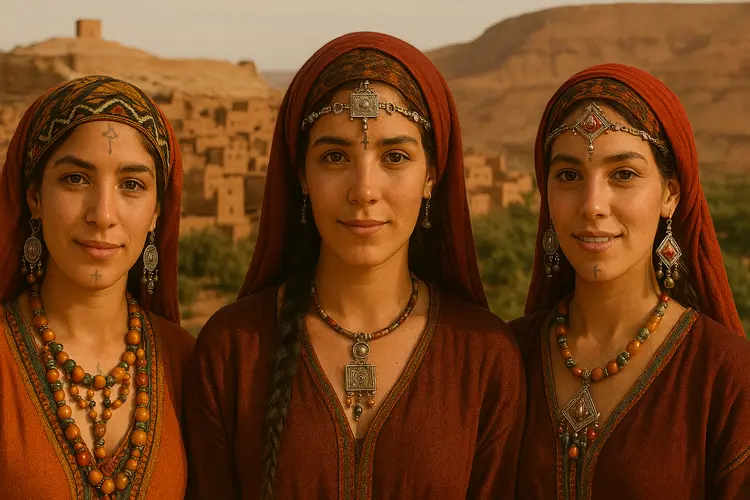
Across the Atlas Mountains, Souss Valley, Rif and desert regions, women have played a central role in preserving one of Morocco’s richest cultural heritages.
The Berber women of Morocco are more accurately known as Amazigh women. “Amazigh” is the community’s own name, while “Imazighen” is its plural form. Although “Berber” remains widely used in tourism, many people prefer Amazigh.
Amazigh culture is not one single tradition. Languages, clothing, jewellery and customs vary between regions, so no single symbol or object can represent every Amazigh community in Morocco.
Amazigh Heritage at a Glance
| Detail | What to Know |
|---|---|
| Preferred Name | Amazigh; plural: Imazighen |
| Main Moroccan Regions | Rif, Middle Atlas, High Atlas, Souss and southeastern oases |
| Traditional Arts | Jewellery, weaving, clothing, music and oral traditions |
| Common Materials | Silver, wool, leather, coral, amber, enamel and glass |
| Cultural Principle | Styles and meanings vary by region and community |
| Marrakech Museum | Pierre Bergé Museum of Berber Arts |
| Visitor Etiquette | Ask permission before photographing people |
A Living Heritage Shaped by Women
Women have helped pass weaving techniques, songs, stories and decorative traditions from one generation to the next.
However, Amazigh heritage has never remained unchanged. Artisans continue to adapt colours, materials and designs according to local needs and personal creativity.
Traditions also differ considerably between regions. Jewellery from the Rif may not carry the same meaning as a piece created in the High Atlas, Souss or southeastern Morocco. Recognising these differences helps visitors avoid treating Amazigh culture as one uniform tradition.
Jewellery, Identity and Family Wealth
Silver jewellery is one of the most recognisable forms of Amazigh craftsmanship.
Women traditionally wore fibula brooches to fasten clothing, together with necklaces, bracelets, earrings and head ornaments. Artisans decorated these pieces through engraving, filigree and enamel, often adding coral, amber, coins or coloured glass.
Jewellery could reflect regional identity, family background or an important stage of life. Valuable pieces could also serve as portable family wealth.
Yet the meaning of an ornament depended on where, when and how it was used. A brooch from the Anti-Atlas may have a different history from one made in the Rif.
What Do Amazigh Symbols Mean?
Diamonds, triangles, zigzags, crosses and hand-shaped motifs appear across jewellery, carpets and clothing.
These designs may relate to protection, identity, nature or community traditions. However, it is misleading to assign one fixed meaning to every symbol.
A motif can change according to:
- The region where it was created
- The age and purpose of the object
- The maker or wearer
- The traditions of the local community
The best way to understand an object is to learn where it came from rather than relying on simplified symbol guides.
Tattoos, Memory and Identity
In some Amazigh communities, women historically wore tattoos on their faces, hands or arms. Designs included dots, lines, crosses and diamond-shaped forms.
Depending on the community, these markings could be associated with beauty, belonging, adulthood, protection or personal experience.
Traditional facial tattooing is now less common among younger generations. Similar motifs continue to appear in contemporary jewellery, textiles, paintings and fashion, although modern designs do not necessarily carry the same meanings as historical tattoos.
Visitors should always ask permission before photographing someone. Traditional clothing or tattoos do not remove a person’s right to privacy.
Weaving and Women’s Creativity
Women have long created carpets, blankets, cloaks and household textiles using local wool, regional techniques and distinctive colour combinations.
A weaver does more than reproduce an inherited pattern. She selects the materials, adapts the design and creates an object for a particular household, ceremony or practical purpose.
Some artisans continue older regional styles, while others introduce contemporary colours and patterns. This ability to adapt helps keep Amazigh craftsmanship alive.
Argan Oil and Women’s Knowledge
Argan oil connects Amazigh heritage with the landscapes of southwestern Morocco.
Women have traditionally held detailed knowledge of preparing the fruit, cracking the hard nuts and extracting the oil. Women-led cooperatives have also created employment and training opportunities in some rural communities.
However, the word “cooperative” alone does not guarantee fair production or complete traceability. Buyers should still check where the oil was produced, how it was processed and whether it is intended for culinary or cosmetic use.
Our guide to Moroccan argan oil explains the difference between the two types and offers practical buying advice.
Amazigh Women in Morocco Today
Amazigh women should not be presented only as guardians of the past.
Today, they work as artists, teachers, researchers, farmers, entrepreneurs and community leaders. Some continue traditional crafts, while others explore Amazigh identity through music, literature, photography, film or contemporary design.
Their experiences vary according to region, language, education, family circumstances and personal choice. Recognising this diversity creates a more accurate and respectful picture of Amazigh life in modern Morocco.
Explore Amazigh Heritage in Marrakech
The Pierre Bergé Museum of Berber Arts, located inside Jardin Majorelle, offers one of Marrakech’s best introductions to Amazigh culture.
Its collection includes jewellery, clothing, textiles, tools and ceremonial objects from regions extending from the Rif to the Sahara. The displays allow visitors to compare regional traditions rather than presenting Amazigh culture as one uniform identity.
If you are planning to visit, check Jardin Majorelle ticket availability in advance. The museum provides a natural cultural complement to the garden and helps place Morocco’s Amazigh craftsmanship in a wider historical context.
A Heritage of Creativity and Strength
The heritage of Amazigh women lives through jewellery, weaving, storytelling, practical knowledge and contemporary creative expression.
It is not a culture frozen in the past. It continues to evolve through the choices and creativity of the women and communities who carry it forward.
By recognising regional differences and avoiding simple stereotypes, visitors can approach Amazigh heritage with greater curiosity, understanding and respect.